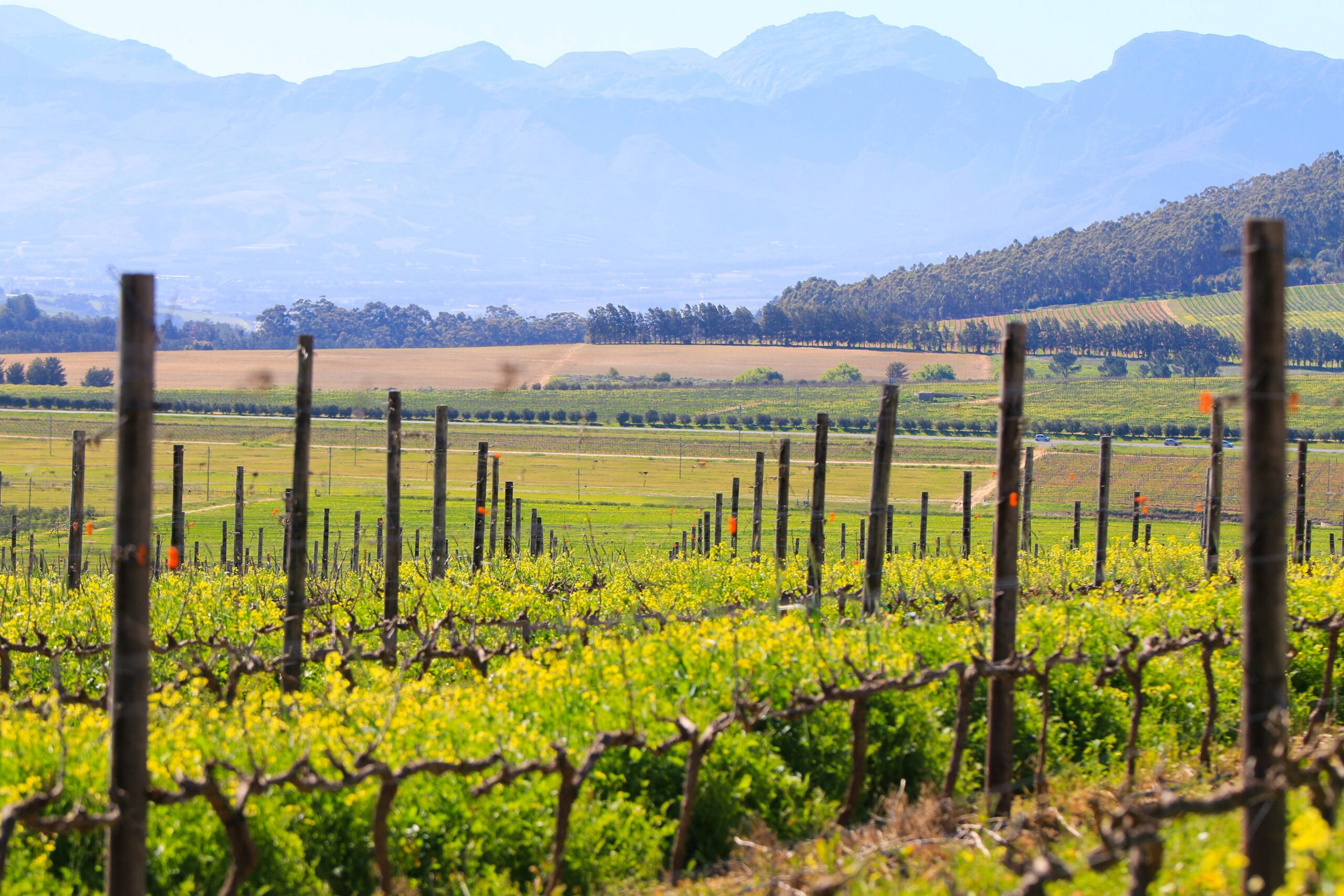
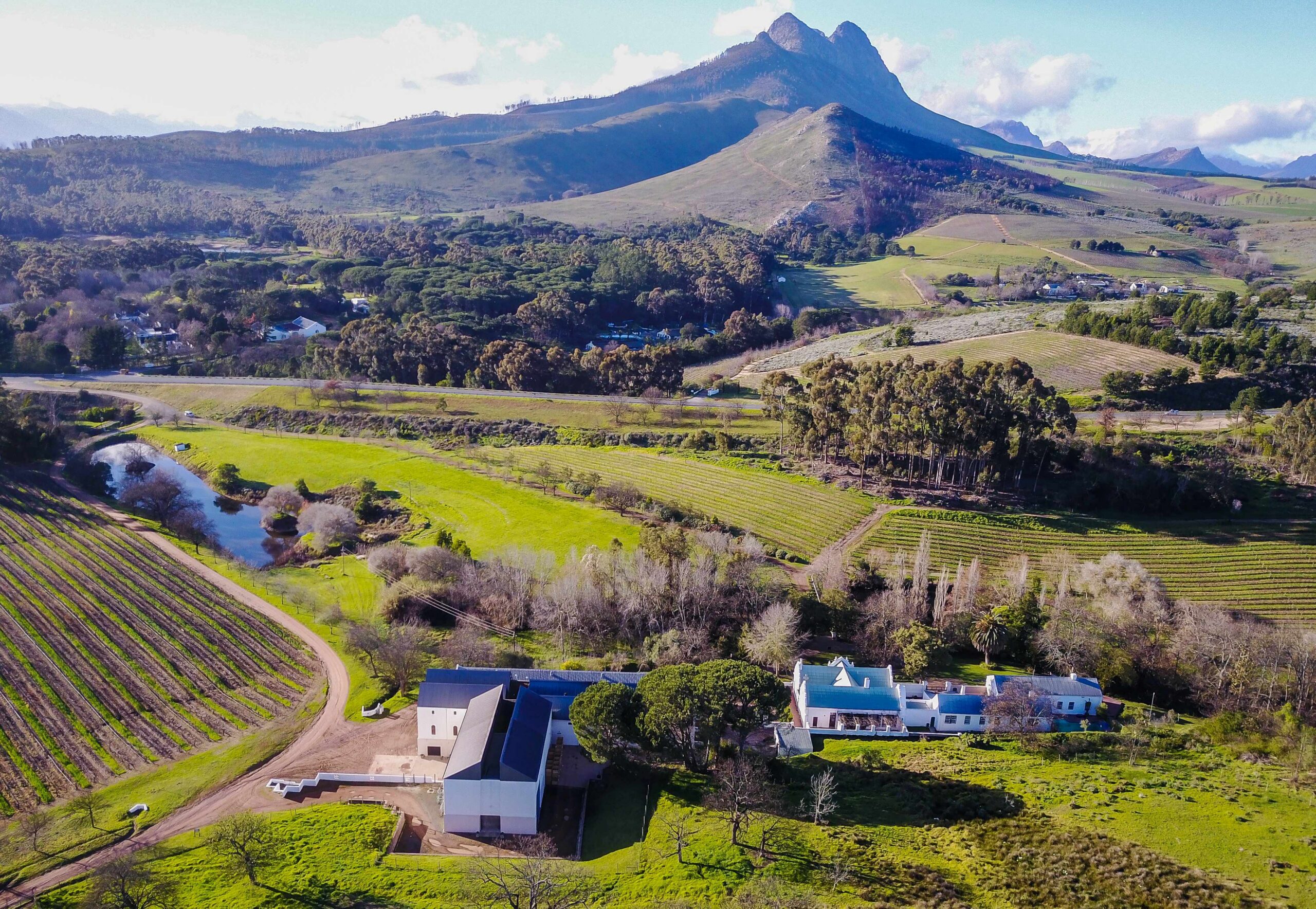
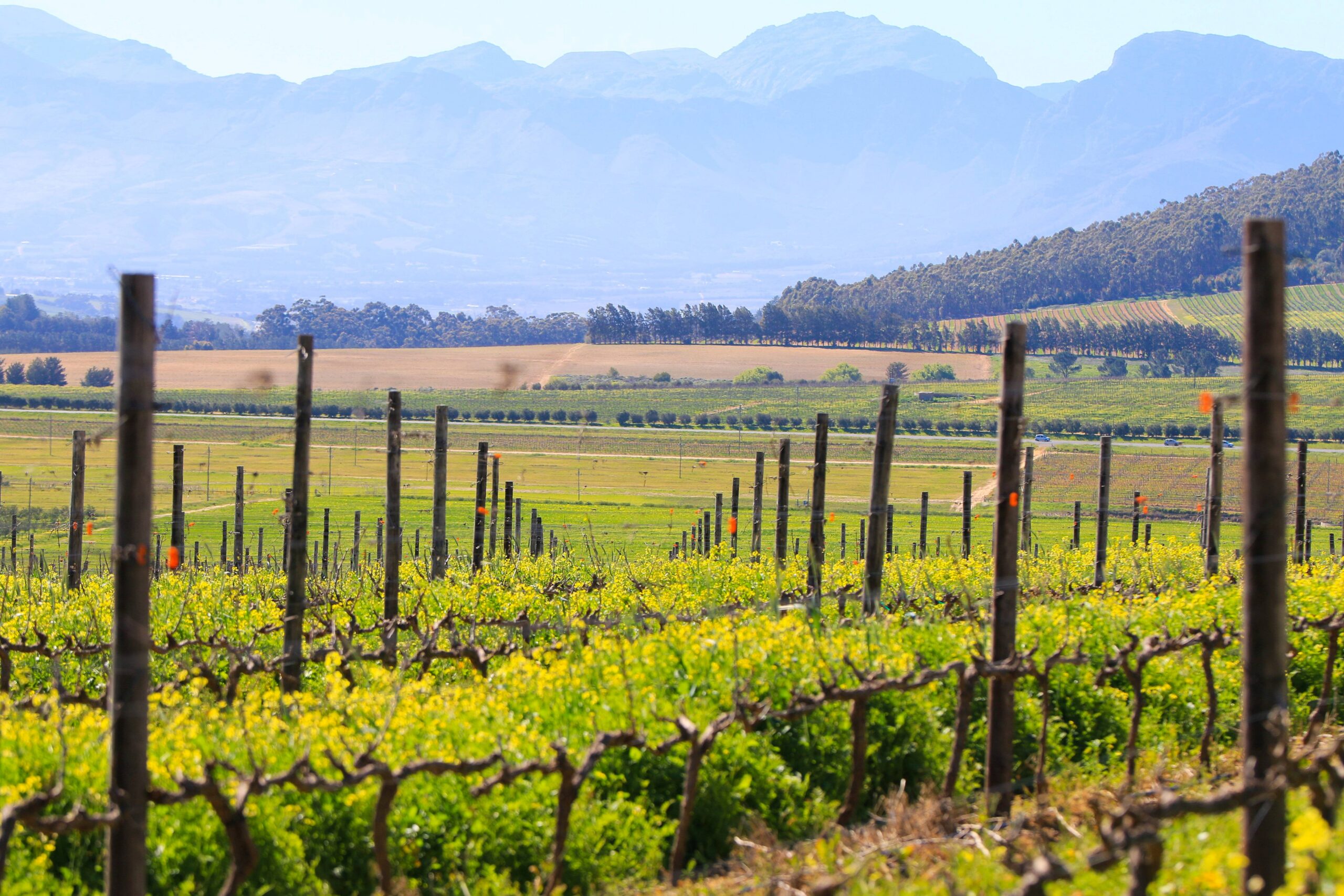
Nestled between the Simonsberg Mountains and Klapmuts Hill, Le Bonheur Wine Estate represents the intersection of historic Stellenbosch heritage and forward-thinking viticulture. Originally established by French Huguenots in the 1700s as a tranquil haven whose name means “happiness,” the estate pairs its centuries-old legacy with a modern commitment to sustainability as an accredited WWF Conservation Champion. Its unique terroir defined by diverse soils, elevations reaching 450 metres, and some of the region’s oldest vine plantings, is farmed through low-impact, regenerative practices that safeguard natural spring waters and native Cape fynbos corridors. Under the direction of celebrated winemaker William Wilkinson, hand-harvested fruit is vinified parcel by parcel using traditional, French-inspired methods, yielding classically structured, site-expressive wines that celebrate both the untamed spirit and ecological integrity of the land.
Le Bonheur Wine Estate practices several sustainability initiatives on the farm and in the winery.
Energy
Electricity consumption is monitored to identify opportunities for improved efficiency while maintaining product quality and operational excellence.
Fuel Wise
A key contributor to our lower direct fuel consumption is the use of electric forklifts throughout the operations.
Water Wise
A natural wastewater purification system treats and recycles wastewater from the cellar, improving water stewardship. Only biodegradable cellar chemicals are used in the cellar. Drip irrigation has been installed throughout the vineyards to deliver water directly to the vine root zone, improving irrigation efficiency and minimising water losses. A pressure chamber has been acquired to enable more precise irrigation scheduling based on vine water stress levels. Water channels has been installed to improve rainwater harvesting and conveyance to the farm dam, enhancing water quality, increasing water capture, and reducing soil erosion.
Soil Health
Cover crops are planted between vineyard rows to reduce erosion, improve soil structure, and increase organic matter. Ground cover management is implemented to protect topsoil, improve water infiltration, and reduce soil compaction. Organic matter incorporation improves soil fertility, soil carbon levels, and moisture retention.
Minimal soil disturbance practices help preserve soil structure and promote long-term soil health.
Biodiversity
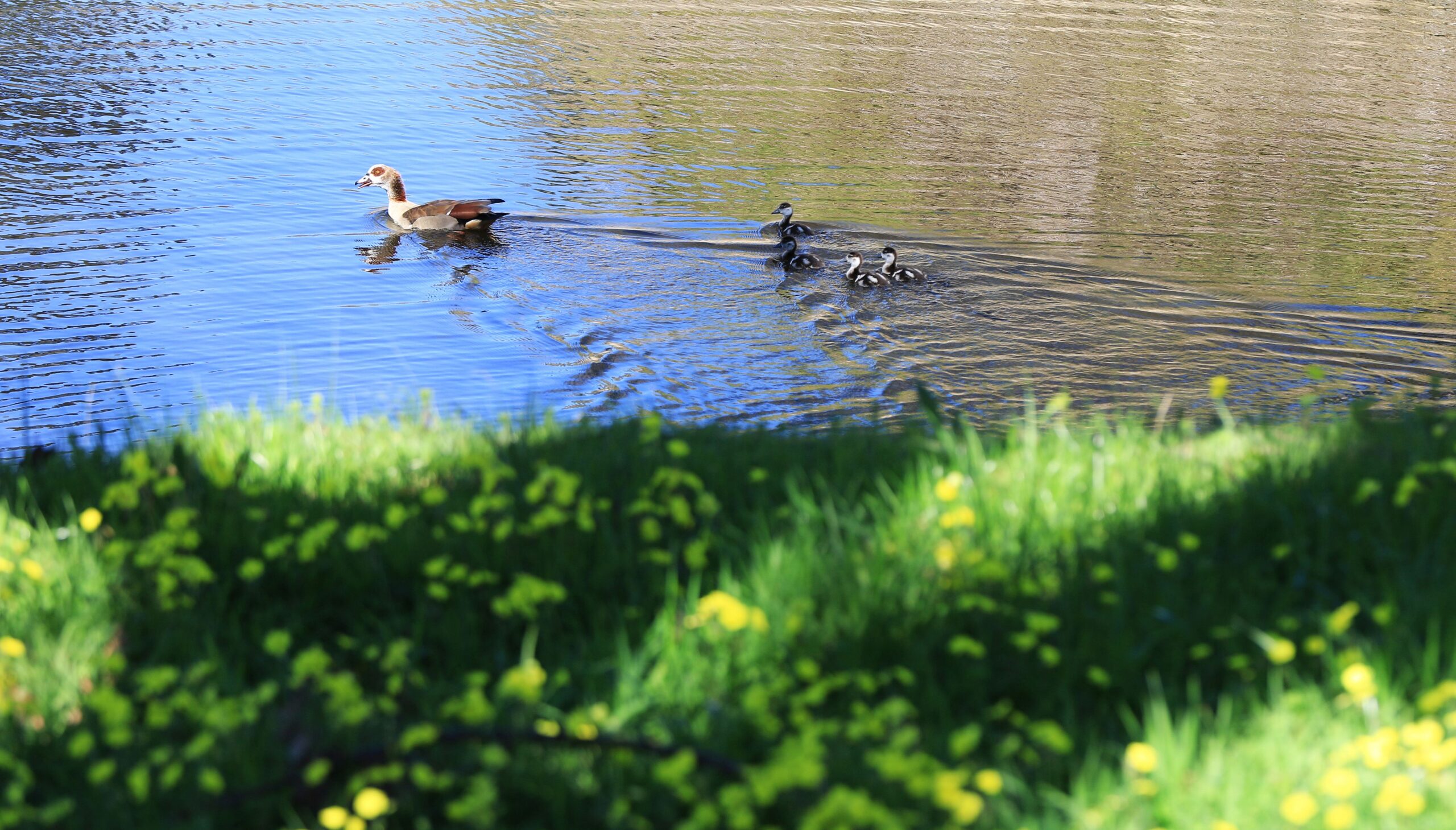
As a proud WWF Conservation Champion, Le Bonheur dedicates 52.54 hectares of our estate to indigenous conservation and thriving wildlife. From resident caracals and small antelope, to over 54 bird species, including the rare Southern Ground Hornbill. In our vineyards, nature leads the way: owl boxes provide chemical-free rodent control, while ladybirds (Cryptolaemus) and beneficial wasps maintain ecological balance against vine mealybugs. These principles confirm our deep commitment to farming in harmony with the land.
Reduce, Reuse, Recycle
Materials such as cardboard, glass and plastics are diverted from landfill through approved recycling channels. Ongoing waste monitoring and employee awareness initiatives support continuous improvement.
Carbon Heroes Recognition Enquiry
Interested in Carbon Heroes recognition for your business or operation?