We strive to manage our vineyards in an audited and sustainable manner while creating a workplace that sets a positive example for the industry. At Ken Forrester Wines, our vision is to improve the lives of those who work with us by growing our business, increasing production and sales, and maintaining a constant focus on quality. We farm sustainably and rely on labour-intensive, hands-on practices, from tilling and pruning to thinning and harvesting. By creating employment, we aim to improve quality of life within our community. Each bottle represents more than wine: it is a small victory and a positive change in someone’s life.
Ken Forrester practices several sustainability initiatives on the farm and in the winery.
Energy
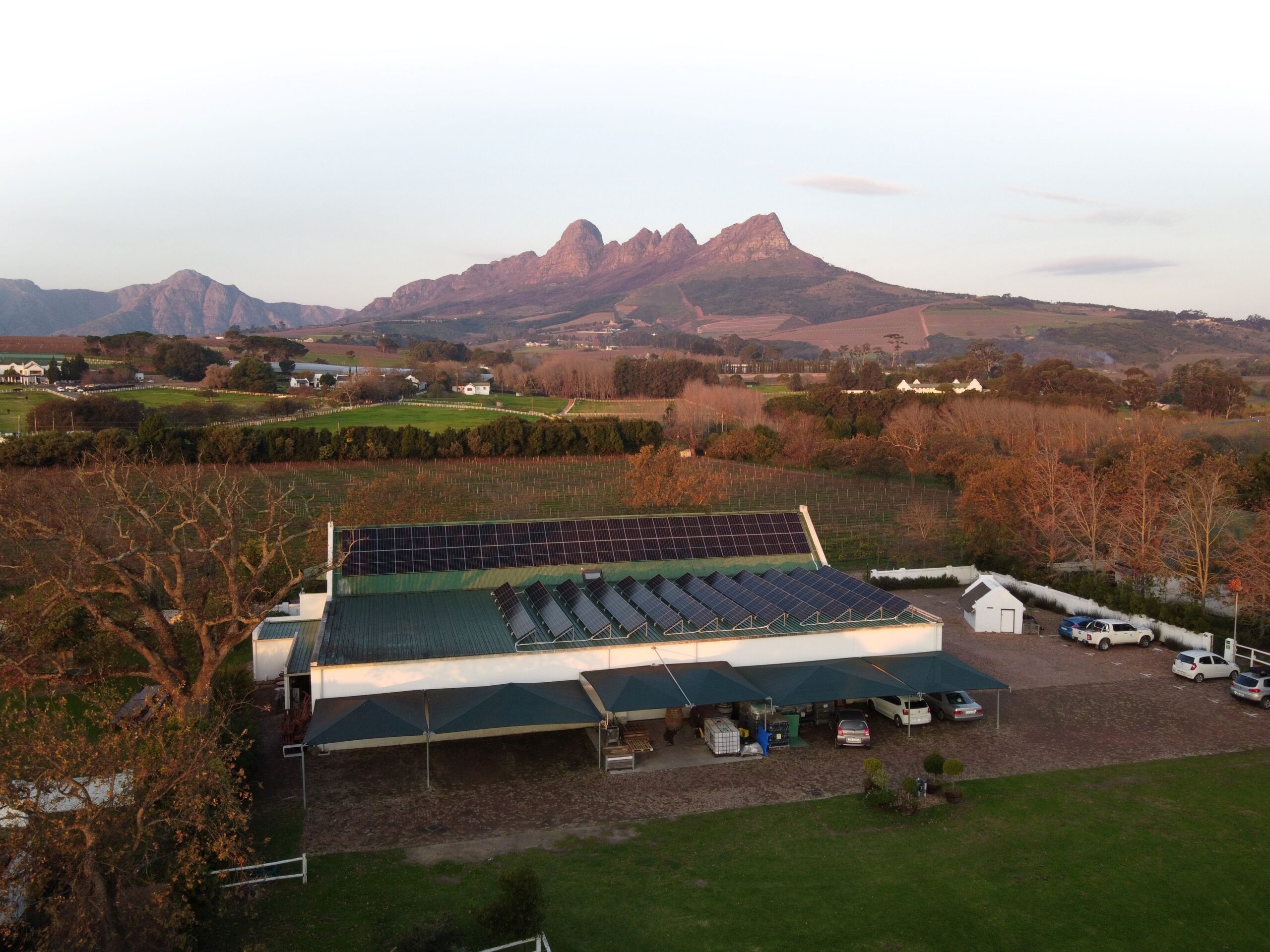
The original architecture of the maturation cellar incorporates the perfect roofline for a solar installation. The winery now boasts a state-of-the-art renewable energy system, synchronised with the Eskom grid, with solar panels facing north at an angle of approximately 30 degrees to maximise energy output.
The system generates sufficient energy to meet our entire daytime needs, while allowing excess energy to be fed back into the grid.
Fuel Wise
Fuel consumption is minimised through efficient vineyard operations, including careful planning of field activities, reducing tractor passes, regular maintenance of vehicles and equipment, and optimised transport logistics.
Water Wise
Water-wise practices include using efficient irrigation systems, monitoring water use, repairing leaks promptly, avoiding unnecessary water consumption, and encouraging water-saving practices throughout our operations.
Soil Health
We have long been pioneers of regenerative farming, making our own organic compost from our beef herd and the bedding from our 15 horses. Our cattle and horses graze on land unsuitable for vineyards, making productive use of the entire farm. Before the autumn rains, cattle graze between the vineyard rows, naturally controlling summer growth and weeds before winter cover crops are sown, while enriching the soil with organic fertiliser. The horses also provide a constant supply of compost material, supporting our sustainable, regenerative approach to farming.
Biodiversity
Our farm supports a rich diversity of insect and plant life. Natural beehives thrive in old oak trees, while ground-nesting bees can also be found along stream banks. Throughout the seasons, butterflies, ladybirds, praying mantises, Christmas beetles, moths and many other insects flourish across the farm. Indigenous vegetation has been carefully preserved and encouraged around the dam and along the river corridor, where more than 50 species of indigenous plants grow, including many with traditional herbal and medicinal uses, all forming part of the unique Cape fynbos ecosystem.
Reduce, Reuse, Recycle
We minimise waste generation, reuse materials whenever practical, and ensure that non-organic waste is separated and sent to approved recycling facilities.
Carbon Heroes Recognition Enquiry
Interested in Carbon Heroes recognition for your business or operation?