Hartenberg Wine Estate, established in 1692, is nestled in the lush Bottelary Hills of Stellenbosch. Their philosophy of producing soft, rich, yet elegant wines that all have the ability to age and retain the brightness of fruit is achieved by combining decades of in-depth knowledge of their terroir with constant innovation and attention to detail. Their commitment to protecting the environment remains paramount in everything they do. The Mackenzie family, owners of the estate since 1986, strive continuously to safeguard Hartenberg and their philosophy to “leave Hartenberg in a better condition than when we started”. Hartenberg farms regeneratively, meaning they work with nature, instead of against it, to increase land productivity and biodiversity. A key factor in achieving this is the restoration of soil health and fertility through increasing soil organic matter and closing the carbon cycle by farming in harmony with nature.
In 2024, Hartenberg installed 360 solar panels, generating 203 kW of electricity.
Water Wise
Water Recycling: All wastewater is cleaned through stone pits and reed beds, then stored in a dam for reuse in a closed-loop system. One hundred percent of wastewater is recycled, and careful management of this resource means that Hartenberg has never, in over 300 years, needed to connect to municipal water.
Irrigation: Night-time irrigation reduces evaporation.
Soil Health
In 2025, Hartenberg became the first winery in South Africa to be verified as regenerative through the Savory Institute’s Ecological Outcome Verification framework.
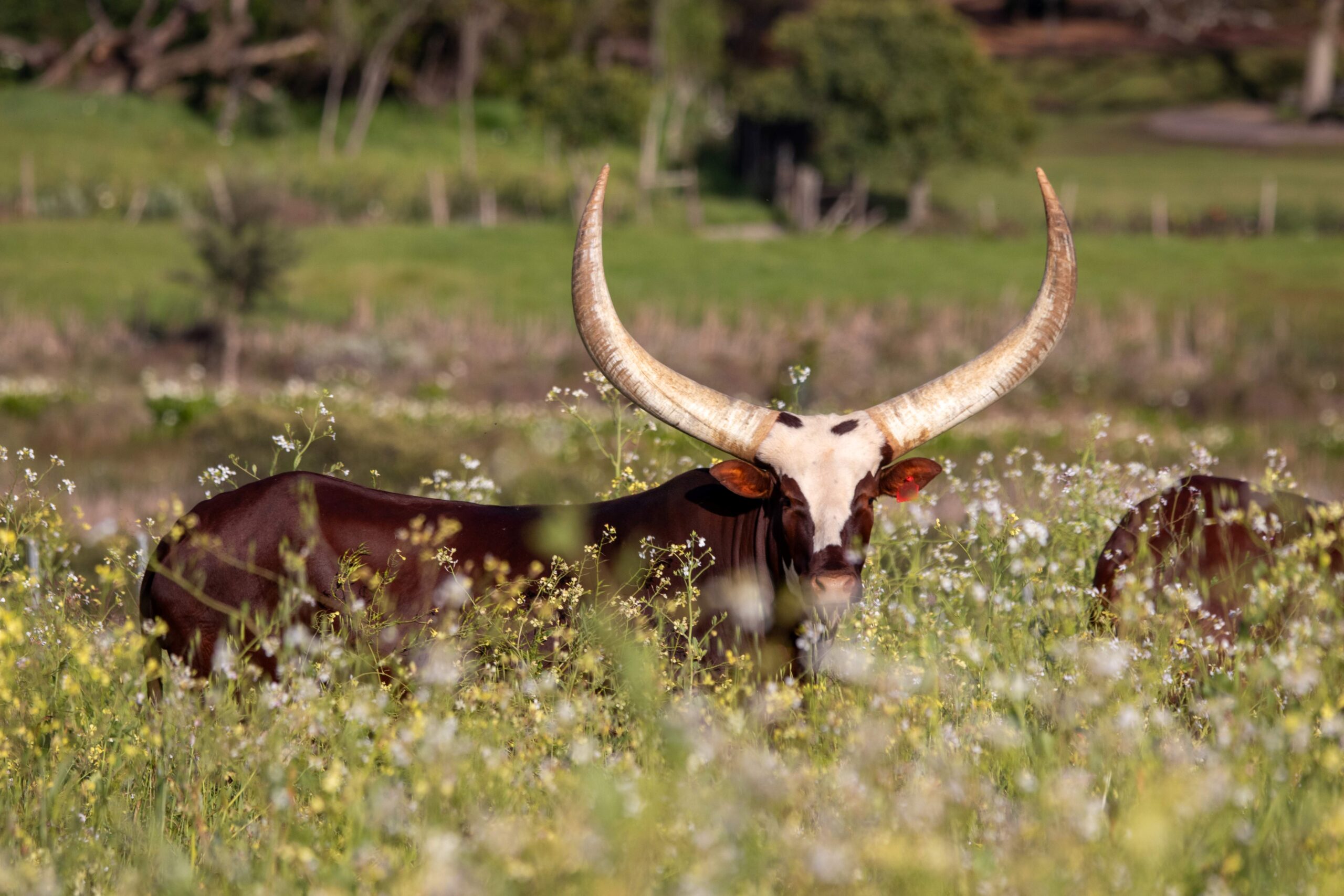
Their regenerative viticulture practices include: Minimum-till farming and mulching to protect living roots and soil structure. Annually changing and sowing multiple different species of cover crops. Holistic, planned grazing of vineyards with cattle and sheep. Composting all garden refuse, annual grape harvest skins and stalks, and food waste. Applying biochar to store carbon and improve water retention. Biological pest control making use of ladybirds, wasps, owls, and Indian runner ducks
Biodiversity
In 2023, Hartenberg was recognised as a WWF Conservation Champion for being a wine farm that leads in conservation and regenerative viticulture.
Wetland rewilding: A decade-long restoration removed invasive alien trees from the 59-hectare wetland on the estate, allowing indigenous flora and fauna to return.
Biological pest control: Hartenberg practices biological pest control, making use of ladybirds and specialist wasps that target mealybugs. Owl boxes encourage predators. Indian Runner ducks patrol the vineyard rows and eat snails.
Reduce, Reuse, Recycle
All garden refuse and annual grape harvest materials are composted and returned to the vineyards. Restaurant food scraps are rapidly composted in a Jora system. All waste wood is also made into biochar, mixed with compost, and returned to the vineyards. Hartenberg is also a proud participant in Stellenbosch Municipality’s recycling programme.
Carbon Heroes Recognition Enquiry
Interested in Carbon Heroes recognition for your business or operation?